Pranayama is one of the eight limbs of yoga taught by Patanjali in the Yoga Sutras. The word sutra means a thread. The yoga sutras are a collection of yoga knowledge or threads that boil down the meaning of yoga to its essence and have been passed down through the ages.
Some of the sutras talk about using the breath as a tool for investigating your inner world. Pranayama (said prah-nah-YAH-mah) is the controlling of your breathing. Breath and breathing can work on many different levels. Being able to control your breath and how you breathe helps calm the mind as well as the body. At the physical level, breath control can be used to either wake up and stimulate the body or calm and relax it. At the emotional level, breath can help us feel more grounded, calm, happier, or more tense, alert, and awake – prepared for danger. Breath can also work at higher levels such as our spiritual level. We will focus for this blog on a relaxing breathing technique called the three-part-breath.
The three part breath –
dirga pranayama
Why practice the three-part-breath? This breath technique can help you become calmer and reduce your feelings of stress or tension. It also helps you use all of your lung capacity to breathe more fully, and thereby increasing the amount of oxygen in your body. It can also help you achieve a deeper meditation state.
Imagine your lungs are divided up into three parts – the lower part or bottom of your lungs, the middle part and upper topmost part. We can and do use any or all of these parts of our lungs in our day-to-day breathing. Some of us habitually only use a portion of our lungs. The three-part-breath focuses our attention on how we breathe and helps us use all of our lung capacity for inhalation and exhalation.
We will experiment with the dirga pranayama, or three-part-breath first lying down, and then sitting in an upright position. If you have trouble lying down on a floor, try using your bed. The technique work just as well there. Lie on your back and get comfortable. If you have lower back pain it might help to put a pillow, bolster, or a rolled up blanked under your knees. Just breathe in and out and notice how it feels to breathe. Change nothing. Just watch your natural breathing pattern. Breathe in and breathe out, in and out. Relax yourself, letting go of any holding in places in your body that you notice. Make yourself comfy. Enjoy the feeling of just breathing.
Now, imagine that your lungs are divided into three parts – the lower, middle, and upper parts and prepare to practice the three-part-breath. Place a hand on your belly near your navel. Empty your lungs completely. As you empty all the air out of your body, notice if your hand is moving downwards or inwards towards the body as the lungs are emptied. Start an in-breathe but breath into the lower part of your lungs first trying to feel your hand moving away or upwards from the body. Try to expand your belly as you breathe. Notice your hand rising upwards towards the ceiling on the in-breath. Continue breathing taking full, deep breaths in and out of your lungs, just concentrating on the feeling of the belly expanding upwards toward the ceiling on the in breath, and downwards, towards your spine or floor on the out breath. Stay with this breathing until you are confident you can feel your lower lungs fill up with air first and then empty on the exhale. Don’t rush. Many of us breathe using only the top part of our lungs and it may take some time to allow your body to adapt from your regular breathing habits. If you feel you’ve ‘gotten it’ take fifteen to twenty breaths additional breaths.
Shift focus to the middle part of your chest.
Place your other hand over the middle of your chest. Keep the first hand on the lower belly. Exhale completely. Inhale again as before expanding your lower lungs near your navel. Once you have expanded your belly as feels comfortable, expand and breathe into the middle of your chest. This is a little subtler. Feel your hand on the middle of your chest rising and falling. Your breath starts with your first hand feeling the lower part of your lungs fill and then continues as your other hand rises as the middle of your lungs expands. Feel the hand on the middle of your chest rising towards the ceiling on the in-breath and falling back towards the spine and ground on the out-breath. Again, this is a subtle feeling and the upper hand will not be moving as much as the one on the belly. Expand your lower part of the lungs first, then your middle lungs on the in-breath. Collapse the middle lungs, then the lower lungs on the out-breath. Try breathing in this fashion for perhaps fifteen to twenty more breaths. Again, breathe into your lower lungs, then your middle lungs. Exhale and feel your middle lungs empty first then your lower lungs.
You may also be able to feel your ribs expand as you breathe. Move your upper hand to the sides of your ribs. Breathing in the same way, feel your ribs expand as you draw breath into the middle part of your lungs.
cookie time!

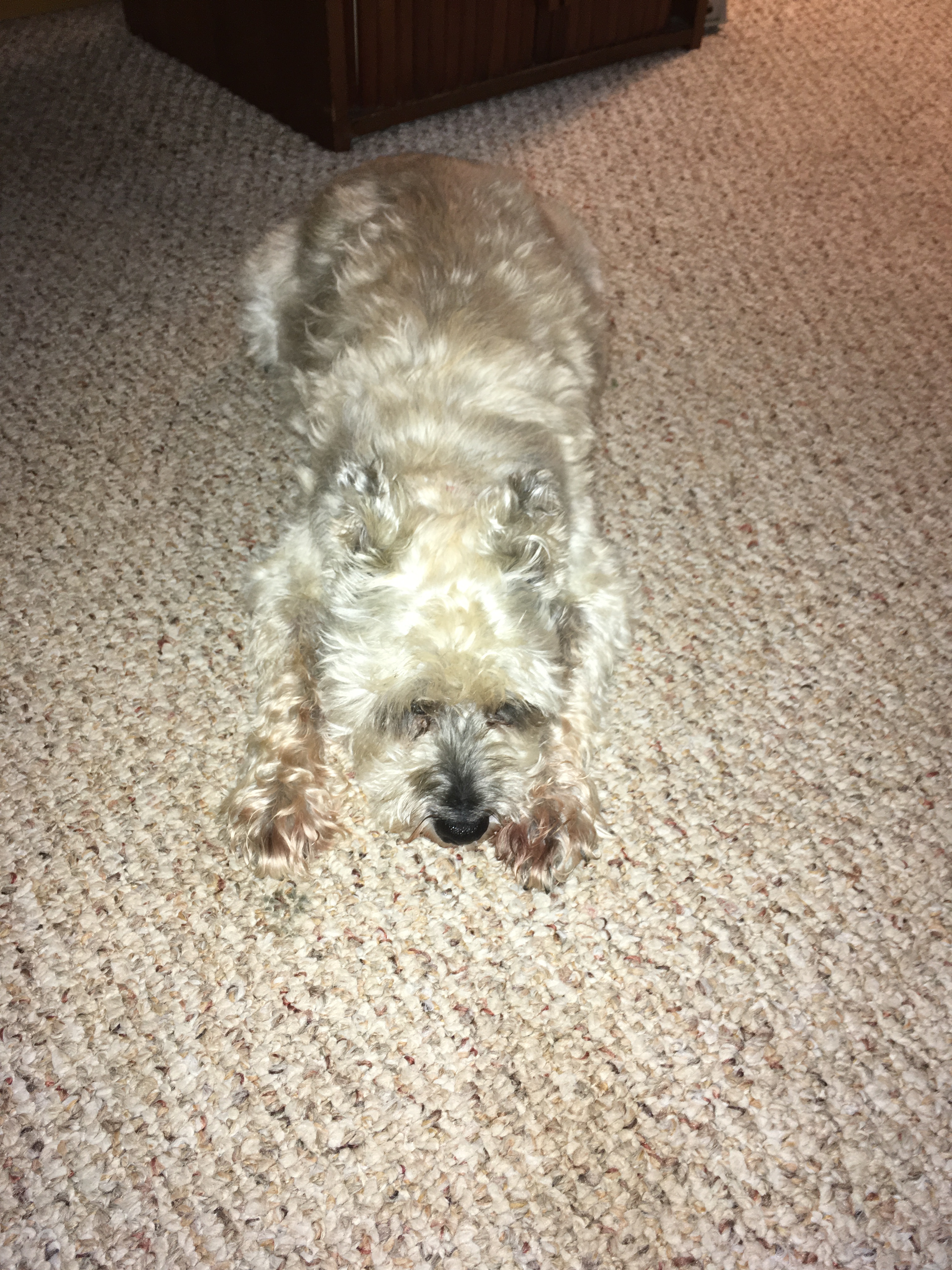
Whew! Who thought that just breathing would be such hard work! Take a break. Eat a cookie if you want to – especially if you are a dog reading this blog. You can always come back later. Try later today or perhaps even tomorrow if you are tired or don’t feel like you are ‘getting it’. As one of my students put it – do anything you want, but don’t forget to breathe!
Filling up with breath
We will now focus on the upper part of our lungs, trying to feel this part of our chest expand. This is the hardest to feel so don’t worry if you don’t. If you try and do not feel anything, just imagine what the sensation would feel like if you did.
Take your hand from your belly and place it on your upper chest. Breathe in and expand your lower belly as before. Secondly, keep breathing and expand your middle chest. Feel the hand moving upward. When the middle of the lungs fill, expand the top of you’re lungs completing the cycle of a full breath. Feel or imagine the hand at the top of your lungs moving upwards towards the ceiling on the in breath and downwards towards the floor on the out breath. Once you feel like you have the technique, take an additional fifteen to twenty breaths in this way.
Sitting pranayama exercises
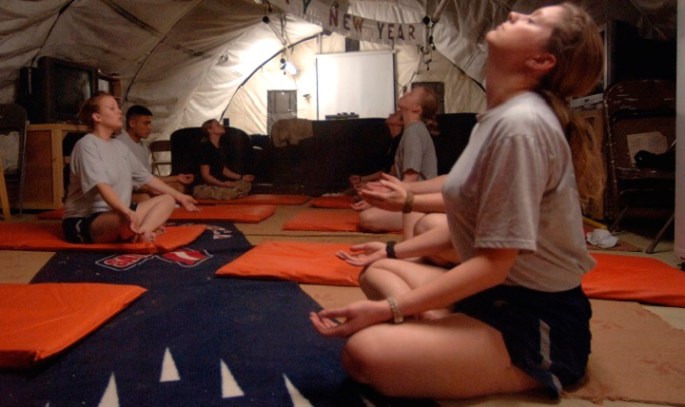
Try the dirga pranayama practice, sitting upright. Sit in a manner that will allow you to be comfortable. Take a few breaths breathing in your normal manner.
Relax and settle the body releasing any tensions you may notice. Use the breathing directions from above. Start by filling your lower lungs and feeling a hand moving gently away from the body on the in breath and towards the body on the out breath. Next take your other hand to the middle of your chest. Fill your lower portions of your lungs fill first, and then feel the middle lungs expand on the in breath and contract on the out breath. Lastly move a hand to the upper part of your chest and feel your breath, starting in the belly, expanding to the middle chest, and completing at the top of your chest. Exhale with the breath leaving the top of your chest first, then the middle, lastly the bottom of your lungs. Again, don’t rush. Take a break whenever you need to – even if you come back to your breathing exercises the next day. Once you have trained yourself to breath in this way, you can place your hands on your thighs sit a bit more comfortably and just breathe. We are done, good work!
Observe how your mind feels at the end of the practice. You can use this breath practice any time you are feeling a bit stressed out. It is also a great practice to sit quietly and breathe in this way while you meditate.
One last thing to ponder: When we take breath into our lungs we expand, getting ourselves closer to the world and the people and things in it. When we exhale, we contract, withdrawing from the world moving more into ourselves. So the next time you want to feel closer to someone – just take a breath.





 Take a leap