Blog

Breathing all the way – practicing pranayama for calm

Breathe tech


Pranayama is one of the eight limbs of yoga taught by Patanjali in the Yoga Sutras. The word sutra means a thread. The yoga sutras are a collection of yoga knowledge or threads that boil down the meaning of yoga to its essence and have been passed down through the ages.


Some of the sutras talk about using the breath as a tool for investigating your inner world. Pranayama (said prah-nah-YAH-mah) is the controlling of your breathing.  Breath and breathing can work on many different levels.  Being able to control your breath and how you breathe helps calm the mind as well as the body.  At the physical level, breath control can be used to either wake up and stimulate the body or calm and relax it.  At the emotional level, breath can help us feel more grounded, calm, happier, or more tense, alert, and awake – prepared for danger.  Breath can also work at higher levels such as our spiritual level.  We will focus for this blog on a relaxing breathing technique called the three-part-breath.


The three part breath – 

dirga pranayama


Why practice the three-part-breath?  This breath technique can help you become calmer and reduce your feelings of stress or tension.  It also helps you use all of your lung capacity to breathe more fully, and thereby increasing the amount of oxygen in your body.  It can also help you achieve a deeper meditation state.


Imagine your lungs are divided up into three parts – the lower part or bottom of your lungs, the middle part and upper topmost part.  We can and do use any or all of these parts of our lungs in our day-to-day breathing.  Some of us habitually only use a portion of our lungs.  The three-part-breath focuses our attention on how we breathe and helps us use all of our lung capacity for inhalation and exhalation.


We will experiment with the dirga pranayama, or three-part-breath first lying down, and then sitting in an upright position.  If you have trouble lying down on a floor, try using your bed.  The technique work just as well there.  Lie on your back and get comfortable.  If you have lower back pain it might help to put a pillow, bolster, or a rolled up blanked under your knees.  Just breathe in and out and notice how it feels to breathe.  Change nothing. Just watch your natural breathing pattern.  Breathe in and breathe out, in and out.  Relax yourself, letting go of any holding in places in your body that you notice.  Make yourself comfy.  Enjoy the feeling of just breathing.


Now, imagine that your lungs are divided into three parts – the lower, middle, and upper parts and prepare to practice the three-part-breath.  Place a hand on your belly near your navel.  Empty your lungs completely. As you empty all the air out of your body, notice if your hand is moving downwards or inwards towards the body as the lungs are emptied.  Start an in-breathe but breath into the lower part of your lungs first trying to feel your hand moving away or upwards from the body.  Try to expand your belly as you breathe.  Notice your hand rising upwards towards the ceiling on the in-breath.  Continue breathing taking full, deep breaths in and out of your lungs, just concentrating on the feeling of the belly expanding upwards toward the ceiling on the in breath, and downwards, towards your spine or floor on the out breath.  Stay with this breathing until you are confident you can feel your lower lungs fill up with air first and then empty on the exhale.  Don’t rush.  Many of us breathe using only the top part of our lungs and it may take some time to allow your body to adapt from your regular breathing habits.  If you feel you’ve  ‘gotten it’ take fifteen to twenty breaths additional breaths.


Shift focus to the middle part of your chest.

Place your other hand over the middle of your chest.  Keep the first hand on the lower belly.  Exhale completely.  Inhale again as before expanding your lower lungs near your navel.  Once you have expanded your belly as feels comfortable, expand and breathe into the middle of your chest.  This is a little subtler.  Feel your hand on the middle of your chest rising and falling.  Your breath starts with your first hand feeling the lower part of your lungs fill and then continues as your other hand rises as the middle of your lungs expands.  Feel the hand on the middle of your chest rising towards the ceiling on the in-breath and falling back towards the spine and ground on the out-breath.  Again, this is a subtle feeling and the upper hand will not be moving as much as the one on the belly.  Expand your lower part of the lungs first, then your middle lungs on the in-breath.  Collapse the middle lungs, then the lower lungs on the out-breath.  Try breathing in this fashion for perhaps fifteen to twenty more breaths.  Again, breathe into your lower lungs, then your middle lungs. Exhale and feel your middle lungs empty first then your lower lungs.


You may also be able to feel your ribs expand as you breathe.  Move your upper hand to the sides of your ribs.  Breathing in the same way, feel your ribs expand as you draw breath into the middle part of your lungs.


cookie time!

cookietime


Whew!  Who thought that just breathing would be such hard work!  Take a break.  Eat a cookie if you want to – especially if you are a dog reading this blog.  You can always come back later.  Try later today or perhaps even tomorrow if you are tired or don’t feel like you are ‘getting it’.  As one of my students put it – do anything you want, but don’t forget to breathe!


Filling up with breath

We will now focus on the upper part of our lungs, trying to feel this part of our chest expand.  This is the hardest to feel so don’t worry if you don’t.  If you try and do not feel anything, just imagine what the sensation would feel like if you did.


Take your hand from your belly and place it on your upper chest.  Breathe in and expand your lower belly as before.  Secondly, keep breathing and expand your middle chest. Feel the hand moving upward.  When the middle of the lungs fill, expand the top of you’re lungs completing the cycle of a full breath.  Feel or imagine the hand at the top of your lungs moving upwards towards the ceiling on the in breath and downwards towards the floor on the out breath.  Once you feel like you have the technique, take an additional fifteen to twenty breaths in this way.

Sitting pranayama exercises

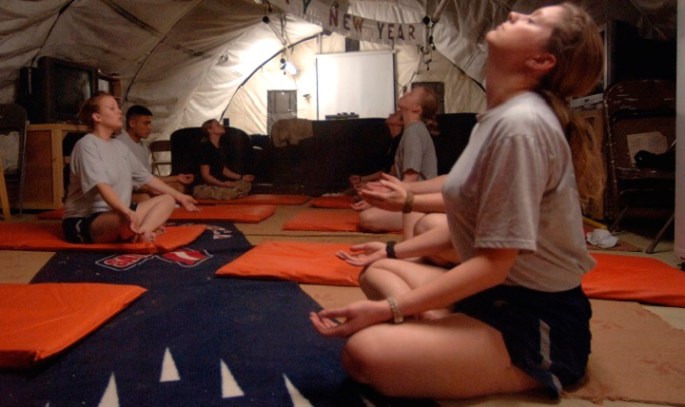
Try the dirga pranayama practice, sitting upright.  Sit in a manner that will allow you to be comfortable.  Take a few breaths breathing in your normal manner.


Relax and settle the body releasing any tensions you may notice.  Use the breathing directions from above.  Start by filling your lower lungs and feeling a hand moving gently away from the body on the in breath and towards the body on the out breath.  Next take your other hand to the middle of your chest.  Fill your lower portions of your lungs fill first, and then feel the middle lungs expand on the in breath and contract on the out breath.  Lastly move a hand to the upper part of your chest and feel your breath, starting in the belly, expanding to the middle chest, and completing at the top of your chest.  Exhale with the breath leaving the top of your chest first, then the middle, lastly the bottom of your lungs.  Again, don’t rush. Take a break whenever you need to – even if you come back to your breathing exercises the next day.  Once you have trained yourself to breath in this way, you can place your hands on your thighs sit a bit more comfortably and just breathe.  We are done,  good work!


Observe how your mind feels at the end of the practice. You can use this breath practice any time you are feeling a bit stressed out.  It is also a great practice to sit quietly and breathe in this way while you meditate.


One last thing to ponder:  When we take breath into our lungs we expand, getting ourselves closer to the world and the people and things in it.  When we exhale, we contract, withdrawing from the world moving more into ourselves.  So the next time you want to feel closer to someone – just take a breath.

 

sky picture

Fall Meditation Surprise

The art of seeing what really is


falltree


Here in New England it is time for fall. The leaves are changing colors and the temperatures are dropping downwards. Nature is preparing for the upcoming winter. Animals are migrating to warmer spots of the world. Some stay, preparing for hibernation or burrowing into the ground. The gardens are producing their final crops of the season. The bees seem to be preparing for the long rest of the upcoming winter finding the last flowers on their journeys to and from the hive.


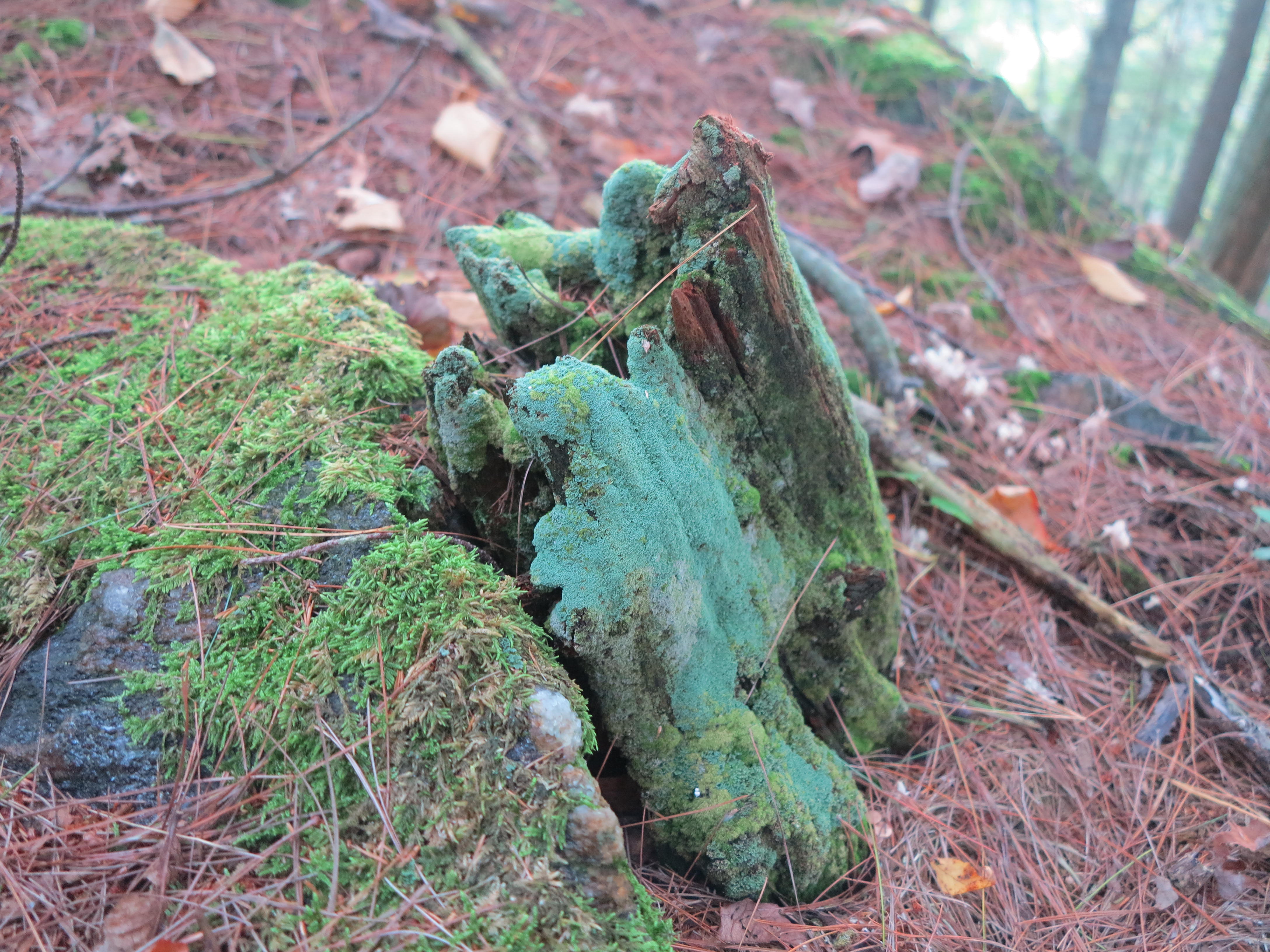
It is a great time of the year for a hike outdoors. Recently, I took a hike into the woods. The leaves had just started changing colors so I had the expectation of seeing the beautiful colors in the trees. This year’s summer was exceptionally hot and humid and the air still retained that feeling of being full of moisture and wetness. In the forest, because of the wetness, the mushrooms and fungi were everywhere in beautiful colors from brilliant oranges, blues, greens, and reds – I had never seen such a show of color! This was quite unexpected. The trees, while starting to change colors have not reached their peak but this was more than compensated for by the colors on the ground.

fall fungus


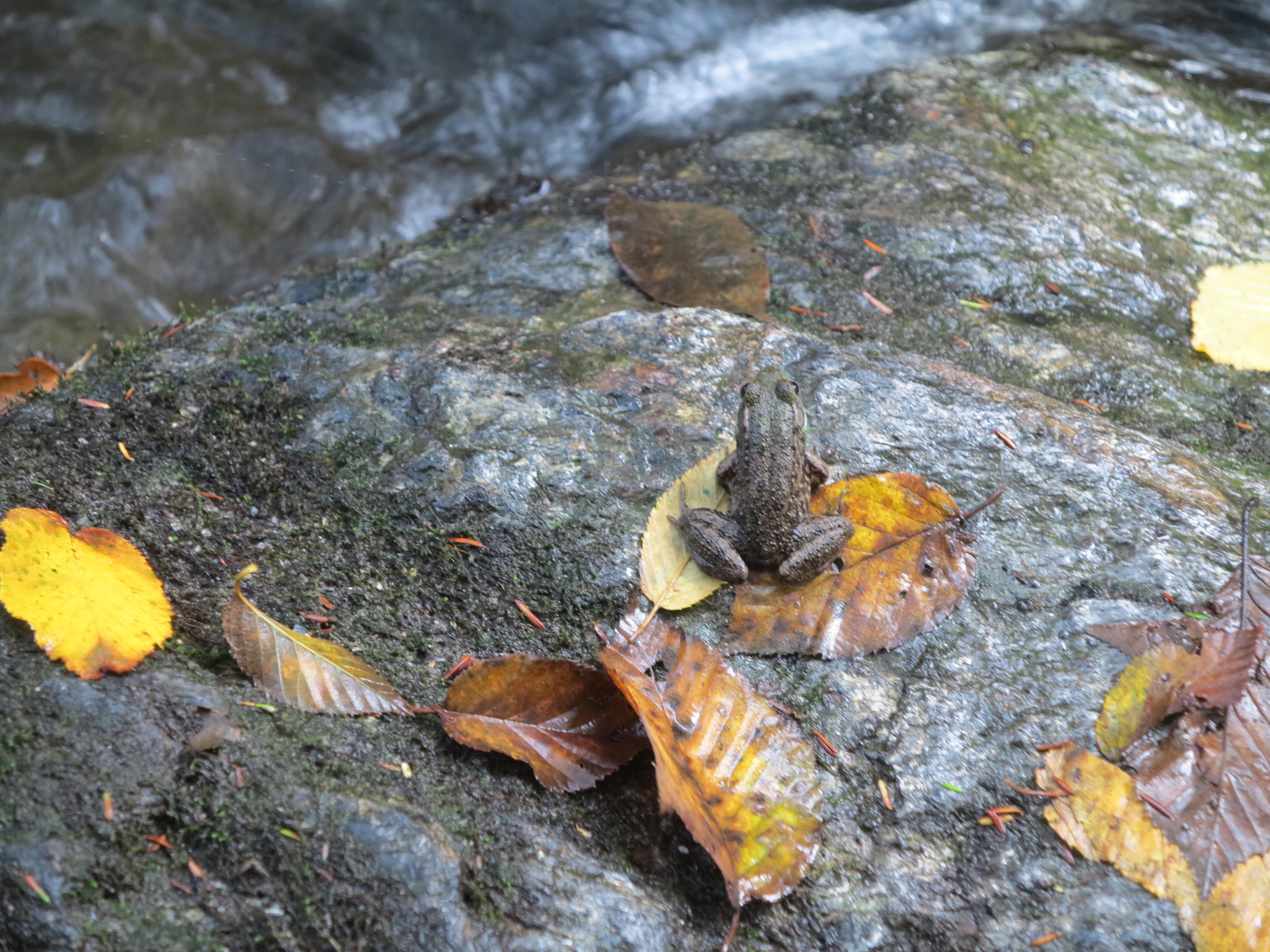
I came upon a spot in the forest, which has a vernal pool – a place that is usually wet in the spring, but dries out in the summer and for the rest of the year. Coming to the pool, I stopped to take a look. The pool was full of water, even in the fall. I continued walking till I reached the edge of the water, I heard the sound of a short cry, a croak and then a splash. Suddenly these sounds were everywhere surrounding me, calling out wherever I stepped. I was surprised to find out that it was frogs were making these sounds. Frogs in the fall – this was quite amazing. Standing quietly at the edge of the water from the far side of the pool came the sound of bullfrogs so there were more than one specie in the vernal pool. Now this was truly exceptional. I expect to hear frogs in the springtime or even in the summer but have never heard them in the fall. The sound of frogs in the fall opened up a new experience to me. If I had ignored the pool or just kept my attention on wanting to see the leaves of the trees I would have missed out – just as I would have missed out on seeing the mushrooms and fungus on the forest floor. Staying open to seeing whatever came up in the forrest allowed me to see some pretty amazing things and interact with nature in a new way.


Sometimes in life we go on expecting the world to be in a certain way. When the world doesn’t meet our presupposed expectations, we may become a little emotionally down. We block what is right in front of us getting it out of our mind, and refocusing our attention on the things we see that are familiar and more in line with our expectations. We choose not to see the world as it really is, but rearrange it to make it fit our sense of what it should look like. We separate ourselves from the change in the world.


This week, take your own walk outside, be it in a forest, or on a sidewalk in a city. Really observe and just look at the world as you walk without bringing your expectations to the experience. Don’t expect to see anything in particular – just concentrate and enjoy seeing whatever you see – being in the moment – observing whatever comes your way. Accepting that that is how it should be.


Can we make the experience of walking mindful, appreciating each and every step of the journey as special in its own way? Can we savor each moment, feeling the sense of aliveness just by walking and not focusing on getting to a destination? Try it out for yourself. You may just find your “inner frog” this fall!

fall frog

Om Manipadme Hum Chanting Meditation

buddahbowl


ॐ मणिपद्मे हूँ

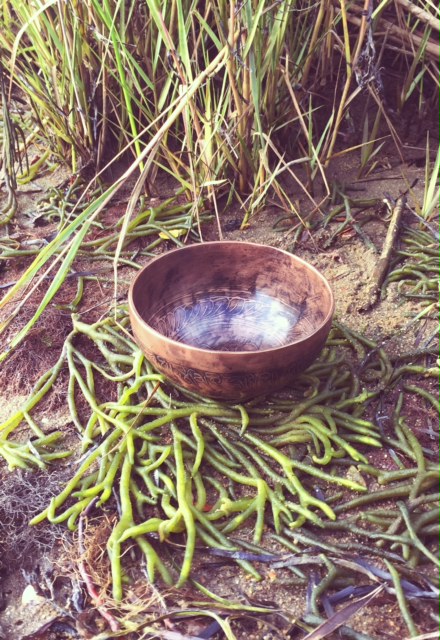
I recently purchased a beautiful bowl from a Tibetan woman. I bought it for its sound qualities, but when she picked it up to complete my purchase, she exclaimed, “Oh, a Buddha prayer bowl!”. When I asked her what she meant, she said that the inscription on the bowl was a Buddhist prayer – Om Manipadme Hum that is used as a prayer by Tibetans and loosely translates as the jewel in the heart of the lotus. The exact meaning of the prayer is hard to quantify in English but the spiritual significance runs deep in Tibet. This prayer or mantra is attached to the bodhisattva of compassion who currently is considered to be the Dalai Lama.


This prayer or mantra may also be found written on rocks in Tibet.  These rocks are called mani stones. Saying the prayer out loud, “Om Mani Patmaii Hoom “ reveals why these are called mani stones as “mani” is the sound of the first syllable after the Om in the prayer. If you look carefully at the close up picture at the end of this blog you can make out the prayer inscription.


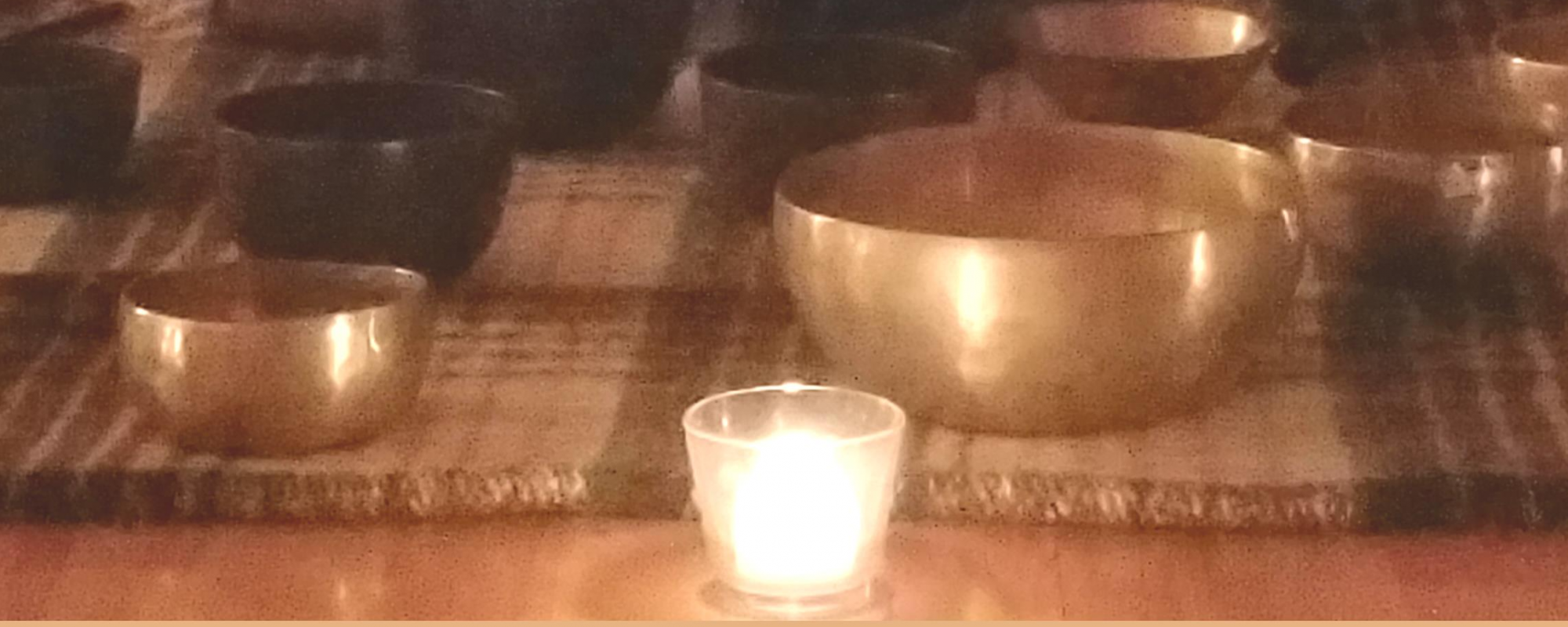
This bowl has a wonderful two-tone quality with both tones blending together in harmony and enhancing the feeling of the prayer inscribed. I can just imagine some Buddhist monk chanting to himself “Om Manipadme Hum” and striking the bowl in meditation practice.


Chanting or mantras can be made a part of any meditation practice. Sit quietly. Take a few breaths to settle the body. Repeat to yourself “ Om Mani Patmai Hoom, Om Mani Patmai Hoom”.  Repeat the prayer over and over. If you happen to have a singing bowl try striking the bowl during your session.  If not, just say the chant over and over again.  Try saying this mantra for a few minutes and notice how you feel. Does your mind seem more at rest? Is the chatter of your mind just a little stiller? Repeat the mantra again for a few minutes, perhaps increasing your time.


bowlinscription

Is your yoga more like a cupcake or a muffin?

appearance-muffin-vs-cupcake


Some say cupcakes are just muffins that believe in miracles.  Today we explore that age-old question -what is the difference between a cupcake and a muffin?  We eat them and seem to believe intuitively and clearly that there is a difference but what is this difference really?


The answer is subtle.  Muffins are more “bread like” while cupcakes are more, well, “cake like”.  Muffins seem to us to be healthier to eat, not filled with sugar, but rather filled with ingredients good for us like- oats, bran, or fruit.


Cupcakes are loaded with extra sugar, and topped with frostings. They usually come at an end of a mealtime as a desert – adding a flourish to the ending of the meal. They seem sweet on the way down but somehow leave you with a sense of absence after the initial sugar high wears off.


To a baker, muffins are made more like how a loaf of bread would be made, while cupcakes usually are made closer to how you would make a cake.


What is your approach to your yoga practice?   When you go through your asana practice, are you more like a cupcake or a muffin? Are you digging down deep inside, making sure all the parts of the pose are integrated together, experiencing the pose from the bottoms of your feet, to the top of your body and letting the poses kneed into your inner being and the core of who you are?  Or are you just looking for the quick fix, the sugar high, and the “I did some yoga today” check box before setting off on another activity?


What’s the difference between expressing a yoga pose completely and just going through the motions?   It’s similar to eating the healthier muffin or the more sugary cupcake.


The poses may look similar on the outside but on the inside the core ingredients are different.  Your approach to the pose is different, your body feels subtly different and when you practice your energy is different.


Ask yourself, are you approaching youryoga practice with a lot of sugar and sweetness or are you doing a healthier more fulfilling version? For each pose, are you expressing yourself to your fullest potential or are you just doing it not believing it is important how you express yourself and just moving on to the next pose.  Start doing your yoga practice, as a muffin would, full of good ingredients but also with just a bit of sweetness and filling as well.


Feel all the complexities in the flavor of the pose.  Believe in yourself, knowing you have done the pose to the best of your ability. Become the muffin.


lolly licking

Sit, Settle, and Sigh – the three S’s and relieving stress

Yoga Sitting Sit Relax Meditation Qigong


We all have stress. Want a quick way to reset your stress level?  Try this.  Find a comfortable, preferably quiet place where you can sit for a few moments.  Sit comfortably in any way that feels good for you.  You can sit cross-legged on the floor, carpet or in a chair.  Take a few moments to settle the body.  Notice any tensions that come into you as you sit with yourself for a few moments.  Try to release the tensions by slightly moving, and settling yourself down until you can remain comfortable.

Sigh.

Start audibly, taking a breath into the body and releasing the breath by sighing through the mouth.  (You probably want to be alone for this).  If you can try closing the mouth and create a sigh just by using your the nose.  Try this for a few minutes.  Then sit quietly,  and notice your state of mind.  Just a few minutes a day can help you reset the stress you may be feeling!